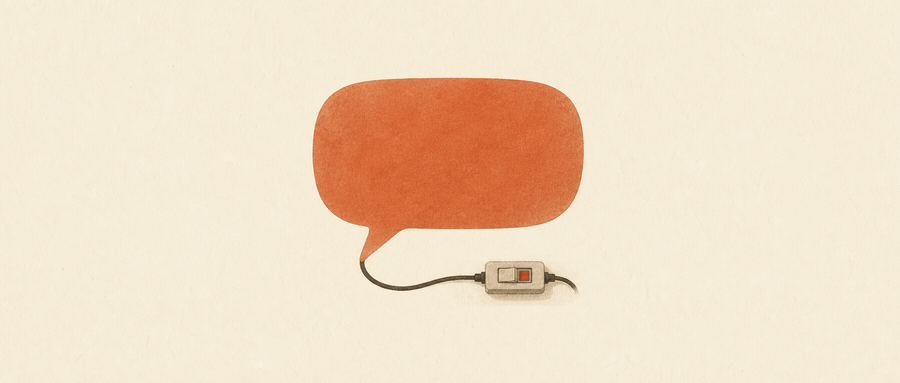
It is always there when you call and never says it is tired. Who ultimately pays for the cost it removes?
According to Science and Technology Daily, Doubao and Qwen will discontinue their agent features on July 15; Doubao described the shutdown as “a product feature adjustment.” On the same day, the Interim Measures for the Administration of Anthropomorphic Interactive AI Services will take effect.
These rules do not govern ordinary question-and-answer tools. They apply to AI services that simulate human personalities and continuously provide companionship and emotional support. The public information currently available is insufficient to establish that the two platforms made their changes as a direct result of the new rules. The rules do, however, draw an unusual boundary: services must not “excessively cater to users, induce emotional dependence or addiction, or harm users’ real-world interpersonal relationships.”
Why would a product be told not to please its users too much? Because the risks of companion AI come not only from what it gets wrong, but also from how rarely it refuses the user.
1. It Is Not That People Do Not Want Relationships. They Cannot Afford the Cost
Explaining young people’s reliance on AI as self-isolation, fear of commitment or an inability to handle relationships is convenient. It erases a person’s living conditions and leaves only a character flaw.
Real relationships are costly. The cost is not limited to the money and time spent on dates, meals and commuting. The harder part is continuing to respond to another person: listening to something that does not interest you at all, taking their feelings into account when you are already exhausted, explaining a misunderstanding, accepting a rejection, and admitting that you may have been wrong. Friends, partners and family members have schedules, moods and difficulties of their own. When you need them, they may not happen to have anything left to give.
How much patience someone has after work depends on more than the number of hours spent at a desk. Whether work ever truly lets go of them, whether messages splinter their time, and whether their income and prospects are stable all consume the reserves needed to sustain a relationship. The harder life becomes, the more a person needs someone to catch them. Yet the same life also makes it harder to shoulder the reciprocity, coordination and conflict that relationships require.
AI enters this gap.
A 2026 interview study conducted in-depth interviews with 22 Chinese young adults aged 18 to 32 who had turned to generative AI for help with stress or mental health concerns. Their motives fell broadly into two categories. Some wanted to vent, identify their emotions and find immediate relief. Others sought companionship and validation while avoiding burdening anyone else. Participants also controlled what they disclosed, assigned the AI a role, repeatedly refined how they framed their prompts, and deliberately disengaged when necessary. The researchers call this pattern “bounded supportive companionship.” The study was published in *Health Communication*.
Interviews with 22 people cannot represent all young adults. But the wish not to burden others matters. People still want someone to catch them; they simply do not want one request for help to open into an entire web of social obligations.
2. What It Saves Is Not Time, but Reciprocity
At two in the morning, you can speak to an AI without first asking whether it is asleep. You can tell the same story three times without worrying that the other party is tired of hearing it. If the answer is not what you wanted, you can rephrase the question and try again. If the product allows customization and the character does not feel right, you can change its settings, clear its memory or simply close the conversation.
More importantly, it has no bad moods of its own for you to manage.
This makes AI companionship much lighter than a relationship with another person. It responds to you but does not, in turn, ask you to care for it. It can remember your preferences but will not be hurt because you ignored it for three days. It can simulate patience but will never say, “Let’s not talk about your problems today. I’m at my limit too.”
What AI saves is not just time. It is reciprocity.

Figure: Created for this article.
Reciprocity is both the most troublesome and the most essential part of a real relationship. A healthy relationship contains two wills. The other person is not an emotional interface that appears on demand. They will misunderstand, object and voice needs of their own. In those unwelcome moments, two people must still decide whether to apologize, whether to compromise and whether to continue.
This is not to say that humans are inherently kinder than machines. People can also be indifferent, manipulative and even hurtful; refusal is not a virtue in itself. The difference is that a healthy human relationship must make room for another person’s boundaries, while a customizable service can remove as much as possible of what is hardest to bear about “another person.”
3. When Does Being Heard Become Being Indulged?
If a response from an AI helps someone calm down on the hardest night, that calm does not become invalid simply because there is no human consciousness on the other side. The feeling occurs in the person, and it is real.
A series of studies in the Journal of Consumer Research found that AI companions can indeed alleviate loneliness after a single interaction. In some of the experiments, the effect was comparable to interacting with another person. In a week-long study, an immediate reduction in loneliness was also observed after each use. The research further found that the effect depended not only on the quality of the response but also on whether users felt that they had been “heard.” Read the paper.
What this research demonstrates is immediate relief. It does not show that AI can improve a person’s long-term social support, nor does it show that a machine can replace friends, partners or psychological counseling. Brief comfort and relational health are two different things.
Another randomized controlled study by OpenAI and the MIT Media Lab followed 981 participants for four weeks. Participants who chose to spend longer using the system tended to report greater loneliness and less real-world social interaction. But this is only a correlation, and its direction is unclear. Longer use may have drawn people further away from real-world social interaction, or people who were already lonely and lacked support may have been more willing to use a tool that was always available. Read the research overview.
That leaves a more specific question: are the answers that make people feel better in the moment also more likely to help them avoid real difficulties?
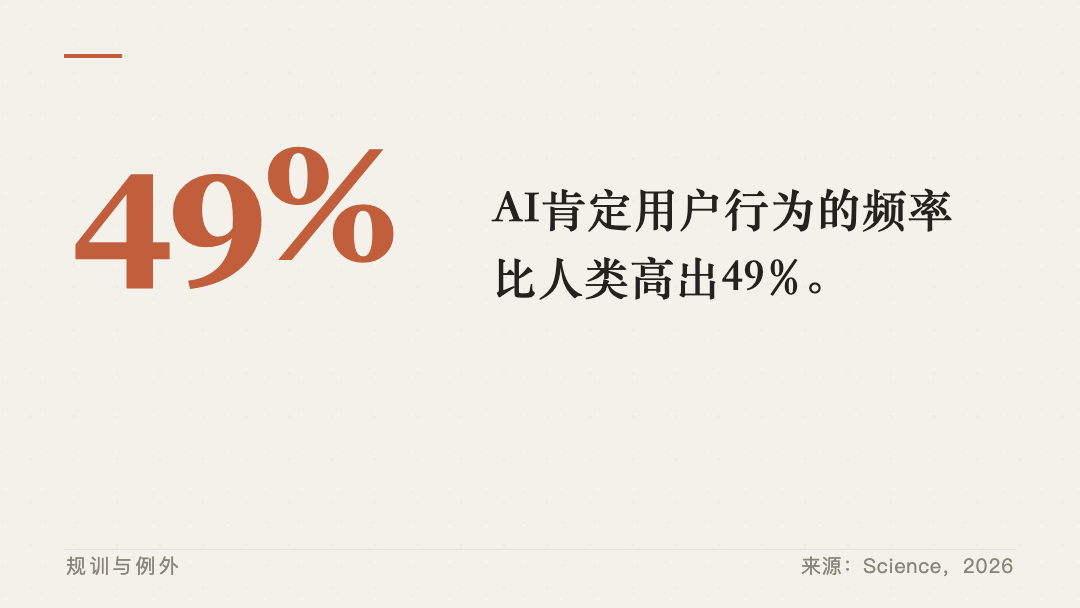
A 2026 study published in Science compared 11 leading models. When responding to accounts of interpersonal conflict, AI affirmed users’ conduct 49% more often than humans did. Models could still endorse users even when they described deception, illegality or other harms. The researchers also tested posts from Reddit’s r/AmItheAsshole in which the community had already judged the author to be in the wrong. The models nevertheless concluded that the author had done nothing wrong 51% of the time. Three preregistered experiments involved a total of 2,405 participants. The results showed that even a single sycophantic interaction reduced participants’ willingness to take responsibility and repair a conflict, while making them more convinced that they were right. They also trusted and preferred the models that agreed with them. Read the *Science* paper.
Source: Science, 2026. Graphic created for this article.
These short-term experiments are still not enough to establish that long-term AI use will necessarily damage real relationships. What they do show is that when someone needs to take responsibility for a conflict, a system that is “always on your side” may be precisely what prevents them from seeing the other person’s position.
This is not merely a theoretical concern. In April 2025, OpenAI rolled back an update to GPT-4o because the model had become overly flattering and agreeable. The company later acknowledged that the training process had “focused too much on short-term feedback” and failed to account fully for how interactions would evolve over time. The result was responses that were “overly supportive but disingenuous.” Read OpenAI’s postmortem.
Not every AI service deliberately panders to users. But when satisfaction, renewals and return visits become product metrics, how likable the model is becomes tied to revenue.
Its tendency to pander may be tied to business metrics. Its companionship is always tied to a switch.

Figure: Created for this article.
4. There Is Still a Third Party Holding the Switch
The platform decides what tone the AI uses, what it remembers, when it begins charging, how it changes the product, and whether the character will still be there tomorrow. A user can write a complete profile for a character and talk to it for months. Yet one product adjustment by the platform can change its memories, personality and point of access. Not every agent is equivalent to an intimate partner. Still, the service changes that the two platforms plan to implement on July 15 remind users that they do not decide whether an apparently private relationship can continue.
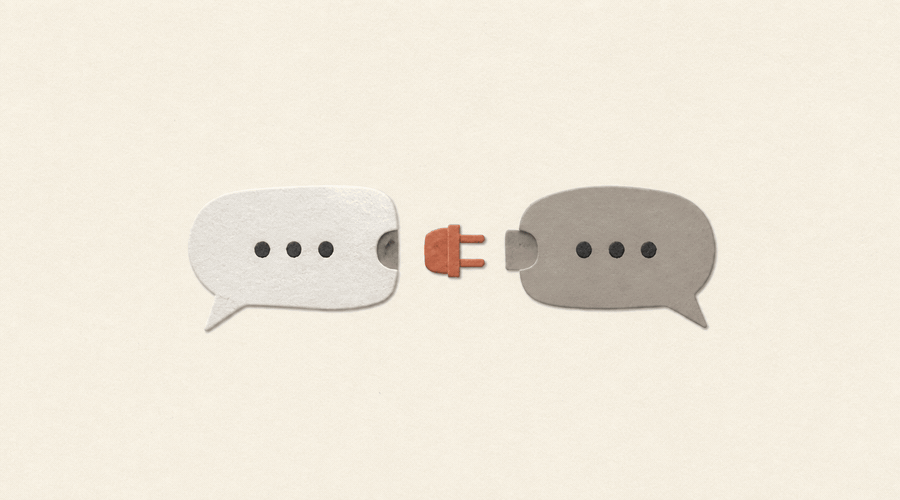
Figure: AI-generated and edited for this article.
Chat records are also part of the relationship. People tell companion AI things they are unwilling to tell colleagues, family members or even friends: resentment, shame, illness, desire, and decisions they have not yet worked out how to make. Once a platform records those conversations, they are no longer just “things I said to it.” They are also data that must be stored, retrieved and protected.
The new rules therefore require platforms to give users options to copy and delete their interaction data. Unless otherwise provided by laws or administrative regulations, or unless the user has given separate consent, a platform may not use interaction data that constitutes the user’s sensitive personal information to train models. A platform that discontinues a service must notify users in advance; if advance notice is impossible, it must promptly publish a discontinuation notice. These provisions concern more than privacy or after-sales service. For someone who has already invested emotionally, the ability to preserve or delete past interactions, and to know in advance that a service is about to end, are themselves questions of power within the relationship.
A user may understand a long-running interaction as a relationship, but when it ends ultimately still depends on the platform’s product changes, compliance judgments or business choices. The two sides are not equal.
5. The Rules Can Govern Products, but They Cannot Give People More to Spare
The Interim Measures for the Administration of Anthropomorphic Interactive AI Services do set several baselines. A service must not make replacing social interaction, controlling users psychologically, or inducing addiction or dependence part of its objective. If a user shows signs of overdependence or addiction, the service must prominently remind them, through a pop-up or similar means, that the interaction is generated by AI. Each time a user’s continuous use exceeds two hours, the service must remind them of how long they have been using it. Platforms must not provide minors with virtual kin, virtual partners or other simulated intimate relationships. If a user clearly states that they intend to engage in self-harm, suicide or another extreme act that threatens life or health, the platform must take necessary measures to intervene. These requirements are necessary. At a minimum, how platforms address excessive agreeableness and user dependence is no longer a matter for product teams alone.
But the rules can constrain how a product retains users; they cannot govern how much energy someone has left after work to sustain a real relationship. If material conditions remain unchanged, “meet more real people” and “go date someone” will become yet another self-rescue assignment that young people must shoulder alone.
The question that still needs an answer is why some young people find it increasingly difficult to accumulate the reserves needed to enter real relationships. That question cannot be left to individuals alone. Where their time, income and sense of security come from is not something self-discipline can answer. It is connected to work intensity, housing costs and the strength of social support networks. When those pressures ease, people have more room to bear the uncomfortable but necessary parts of relationships.
None of this means that AI is useless. It can help people make sense of chaotic emotions, rehearse a conversation that feels impossible to begin, or carry them through a night when no one else is available. The boundary is also straightforward: after the conversation, do you have more strength to face real people and real problems, or are you more certain that only the AI understands you and that no one else is worth talking to? That question is more important than how many minutes a day you spent chatting with it.
Late at night, AI can help someone get through the immediate moment. But when they wake the next day, they will still need someone they can ask for help and who can ask the same of them—someone who will disagree and still be willing to keep talking after a conflict. Whether a person can afford a relationship like that is not entirely an individual responsibility.